


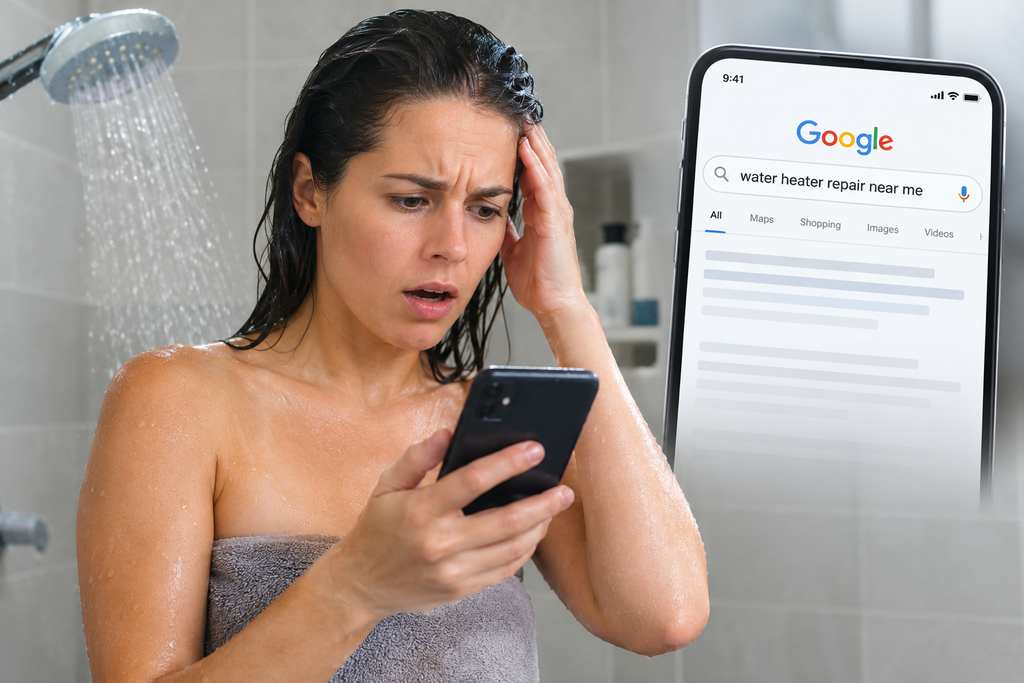
A cold shower can send you straight to Google searching for water heater repair near me. Before you assume the entire system has failed, check for these seven warning signs.
1. The Water Stays Cold or Turns Cold Too Quickly
If your shower suddenly goes cold, the first thing to consider is whether the water heater actually had enough time to recover.
A household can use up a tank of hot water surprisingly quickly. Several showers, a load of laundry, and a dishwasher running at the same time can leave you waiting for the next batch of hot water.
That is different from a water heater that consistently fails to provide hot water.
Pay attention to what happens.
If the water never gets properly hot, there could be a problem with the heating system. If it starts hot and becomes cold after only a few minutes, the heater may not be keeping up as it should. If every hot water fixture in the house has the same problem, the water heater deserves a closer look.
If only one faucet or shower has a temperature problem, the water heater may not be the culprit at all.
That distinction matters because replacing a water heater will not fix a problem that is actually limited to one fixture.
Thor’s Plumbing Solutions services both traditional tank water heaters and tankless systems. If your hot water has become unreliable, the company can assess the system and identify the source of the problem.
For homeowners in Hillsborough, see Thor’s water heater services in Hillsborough for local service information.
2. Your Water Heater Suddenly Sounds Different
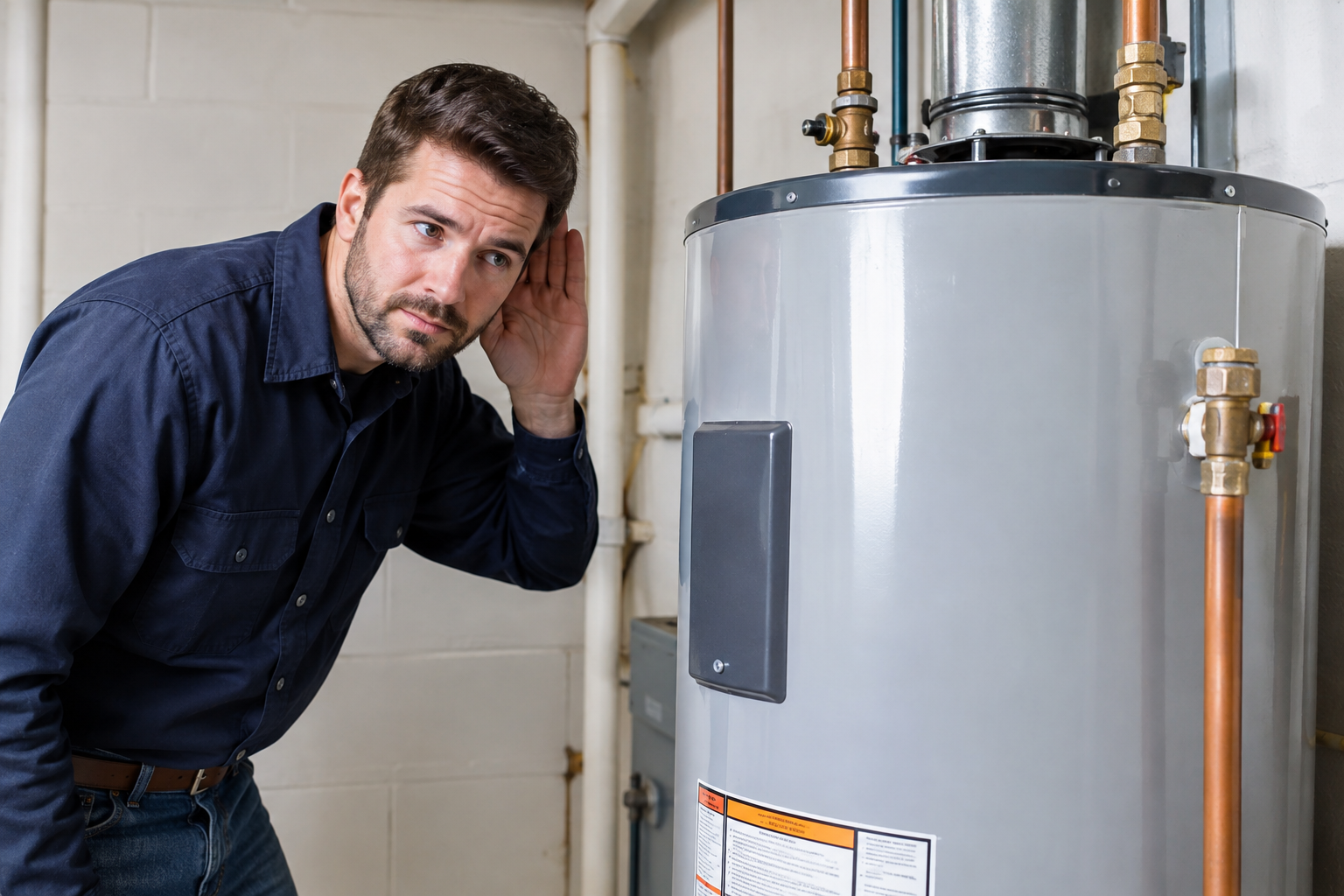
Water heaters make some noise during normal operation. A sudden change in the sound is more useful to pay attention to.
You might hear popping, banging, rumbling, crackling, or hissing when the unit heats water.
For example, if the heater used to operate quietly but now makes a loud popping sound during a heating cycle, do not assume that is simply what an older water heater sounds like.
The same applies to a rumbling sound that seems to be getting louder.
You do not need to take the unit apart to investigate. Listen for when the noise happens and whether it occurs every time the heater runs.
That information can help a plumber understand what changed.
3. You Are Running Out of Hot Water During Normal Use
Running out of hot water once after a house full of guests is not necessarily a sign of a failing water heater.
Running out during your normal routine is different.
Suppose two people in your home could previously take back to back showers, but now the second shower turns cold after a few minutes. Or perhaps the hot water used to last through the morning, but now you have to wait before doing the dishes.
Those changes are worth investigating.
A traditional tank water heater stores a specific amount of heated water. A tankless system heats water as it is needed. Because the two systems work differently, the same symptom can have different causes.
An increase in household demand can also make an existing system seem inadequate. A new family member, more frequent laundry, or additional hot water use can change how much capacity your home needs.
Before assuming you need a larger water heater, have the current system checked. You may have a repairable problem rather than a capacity problem.
4. There Is Water Around the Water Heater
Water on the floor near the water heater should not be ignored.
Look around the unit occasionally, especially if you notice another warning sign at the same time. Check for damp flooring, fresh drips, moisture around connections, or water collecting beneath the tank.
The source may not be obvious.
A connection can leak. A valve can drip. A tank can develop a leak. Water can also travel along a pipe before reaching the floor, making it look as though the water is coming from somewhere else.
That is why simply wiping up the water does not solve the problem.
If you find a small amount of moisture, arrange an inspection before it becomes a larger leak. If water is actively spreading across the floor or damaging nearby materials, treat the situation as urgent.
Do not attempt to disassemble the water heater yourself, particularly if the system uses gas or electrical components.
For an urgent plumbing problem, you can also review Thor’s emergency plumbing services.
5. Your Hot Water Looks Rusty or Discolored
Turn on the hot water and take a look at what comes out.
If the water has suddenly become rusty, brown, cloudy, or noticeably different from normal, pay attention to whether the same thing happens with cold water.
If only the hot water is discolored, the water heater is one place worth investigating.
If both hot and cold water look different, the source may be elsewhere in the plumbing or water supply.
You can also check more than one fixture. Run the hot water at the kitchen sink, bathroom sink, and shower. If the discoloration appears at several hot water fixtures, that gives you more useful information than checking only one faucet.
Do not keep flushing the same fixture and assume the problem has gone away if the discoloration keeps returning.
If your concern is broader than the water heater and involves the quality of your household water, Thor’s Plumbing Solutions also offers water purification and filtration services.
6. An Electric Water Heater Keeps Tripping the Breaker
If you have an electric water heater and its circuit keeps tripping, do not make a habit of resetting the breaker every time it happens.
The breaker is there to interrupt the electrical supply when something is wrong. Repeated trips mean the underlying problem needs attention.
Notice the pattern if you can do so safely.
Does the breaker trip while the heater is running? Does it happen after someone takes a long shower? Has it started happening more frequently?
You do not need to remove electrical covers or test components yourself to answer those questions.
If the breaker trips again after being reset, leave the situation alone and arrange for the appropriate professional service. Electrical components inside and around a water heater are not something to experiment with.
This is also a good example of why a water heater problem is not always just a plumbing problem. The safest repair depends on identifying what is actually causing the interruption.
7. Your Water Heater Is Getting Older and Less Reliable
Age by itself does not mean a water heater needs to be replaced.
What matters is how the system is performing.
A heater that has become less reliable may give you several clues at once. You might notice that hot water takes longer to recover, the unit makes more noise, water appears around it, or repairs are becoming more frequent.
Look at the pattern rather than focusing on one isolated symptom.
For example, if your water heater has been working normally for years and now you are dealing with repeated loss of hot water, unusual noises, and a leak, it is time for a proper assessment.
On the other hand, one minor issue on an otherwise reliable system does not automatically mean you need a new unit.
The right choice depends on the condition of the heater, the problem involved, and whether repairing the existing equipment makes practical sense.
When Should You Search for “Water Heater Repair Near Me”?
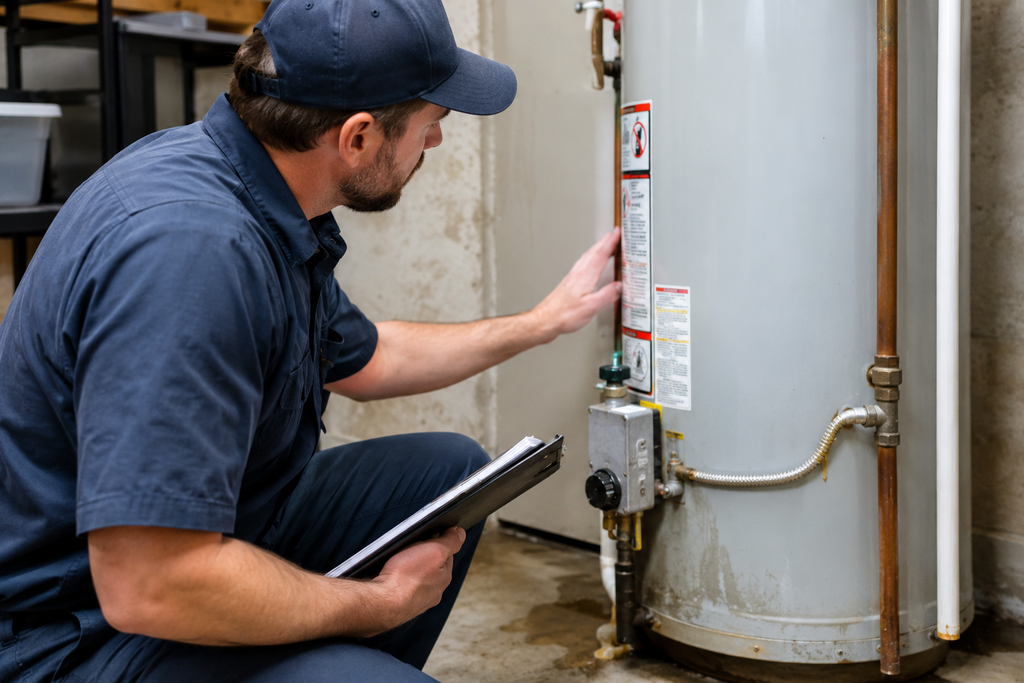
The right time to look for water heater repair is when a problem has become persistent, not necessarily when the heater stops working completely.
A few examples are easy to recognize.
If the water has been getting progressively colder, schedule service rather than waiting for a complete loss of hot water.
If the heater is making a new noise every time it runs, have someone check it.
If you find water around the unit, do not wait several weeks to see whether it happens again.
And if your electric water heater repeatedly trips its breaker, do not keep resetting it and hoping the problem disappears.
When homeowners search for “hot water heater repair near me,” they are often trying to figure out whether the problem can be repaired or whether they need a replacement. A proper inspection can answer that question based on the actual condition of the equipment.
Thor’s Plumbing Solutions provides water heater services for homeowners throughout its service area.
For Durham residents, see the company’s water heater repair services in Durham.
When Is a Water Heater Problem an Emergency?
Not every loss of hot water requires an emergency plumber.
A heater that is producing less hot water than it used to can usually be scheduled for service. A strange noise that has been present for some time may also call for a prompt inspection rather than an emergency response.
An active leak is different.
If water is flowing from the unit, spreading across the floor, or threatening nearby walls, flooring, or belongings, the situation needs more immediate attention.
That is when a homeowner may search for “24 hour water heater repair near me.”
If you have an urgent plumbing problem, contact an appropriate emergency plumbing provider rather than attempting a repair you are not equipped to handle.
Thor’s Plumbing Solutions offers emergency plumbing services for urgent plumbing situations.
Repair or Replacement: Which One Makes Sense?
A water heater problem does not automatically mean you need a new water heater.
A repair may make sense when the unit is otherwise in good condition and the problem is limited to a serviceable component.
Replacement may be worth considering when the system has become unreliable, has recurring problems, or has reached a point where continued repairs no longer make practical sense.
The condition of the unit matters more than a single symptom.
For example, a water heater that occasionally needs service is a different situation from one that has leaked, lost hot water repeatedly, and required several repairs in a short period.
A plumber can inspect the equipment and explain what is failing, what can be repaired, and whether replacement should be considered.
That gives you something more useful than simply being told to buy a new water heater.
How to Avoid Being Surprised by a Water Heater Problem
You do not need to become a plumber to spot early warning signs.
Just pay attention to changes.
Once every few weeks, take a quick look around the water heater. Check whether the floor is dry. Listen for new noises when the system runs. Notice whether your normal supply of hot water is changing.
It also helps to know what your usual hot water demand looks like.
If your household suddenly starts running out of hot water every morning, make a note of when it happens and what appliances or fixtures were being used.
Those simple observations can give a plumber useful information when diagnosing the problem.
Most importantly, do not ignore a leak or a repeated electrical problem simply because the water heater is still producing hot water.
A Cold Shower Is Annoying. A Water Heater Problem Can Be More Than That.
If your water heater is making unusual noises, running out of hot water too quickly, leaking, producing discolored hot water, or repeatedly losing power, it is time to find out why.
You do not have to wait until the shower goes completely cold.
Thor’s Plumbing Solutions provides water heater services as well as broader plumbing services for homeowners throughout its service area.
If you are in Burlington, you can learn more about plumbing services in Burlington.
Homeowners in Graham can visit the company’s Graham plumbing services page, while homeowners in Pittsboro can learn more about plumbing services in Pittsboro.
If the problem is urgent, use the emergency plumbing information above rather than waiting for a small issue to become a major one.
Frequently Asked Questions
1. How do I know if my water heater needs repair?
Look for repeated problems such as cold or lukewarm water, running out of hot water faster than normal, unusual noises, leaks, discolored hot water, or repeated electrical interruptions.
2. Why does my shower suddenly turn cold?
You may have used up the available hot water, particularly after several people have showered or multiple appliances have used hot water. If the problem happens regularly during normal use, the water heater should be checked.
3. Is water around my water heater an emergency?
An active leak that is spreading across the floor or causing property damage needs prompt attention. Even a small recurring leak should not be ignored because the source may become worse.
4. Should I repair or replace my water heater?
It depends on the condition of the unit and the problem causing the failure. A repair may be appropriate for an otherwise reliable system, while repeated problems or significant deterioration may make replacement worth considering.
5. Why is my electric water heater tripping the breaker?
A repeatedly tripping breaker indicates that something in the electrical system needs attention. Do not repeatedly reset the breaker or remove electrical covers yourself.
6. Why does my water heater make popping or rumbling sounds?
A change in the sound of the water heater can indicate that its operation has changed. If the noise is new, loud, or happening every time the unit heats water, arrange for an inspection.
7. How long can I wait to repair a water heater?
That depends on the symptom. A gradual decline in hot water may allow you to schedule service, while an active leak or recurring electrical interruption should be addressed promptly.
8. Can the same plumber service tank and tankless water heaters?
Yes. Thor’s Plumbing Solutions provides services for both traditional tank water heaters and tankless systems. The appropriate service depends on the type of system and the problem it is experiencing.